I just finished my talk at Under The Radar down in Mountain View. The 6min format was intense and I’m glad I did…good to sharpen the presentation skills once in a while.
We’re very excited that Adobe has now announced their support for PhoneGap! The gist of is it is now you can package your apps with PhoneGap and launch the iOS and Android emulators directly from within Dreamweaver. This version of Dreamweaver also bakes in support for jQuery Mobile which is one of the most popular frameworks used inside PhoneGap. I think this is awesome! This a big move forward for Adobe embracing mobile, open standards (HTML5), the mobile web and open source!
Scott Fegette, Dreamweaver Product Manager, has the most in depth write up on it. Here’s a snipit.
For Android, the complex process of installing, configuring, and verifying the Android SDK has always been a bit of a chore. Dreamweaver CS5.5 takes all the pain out of this process by providing an “easy install” option, which will do all of the above for you in the background. Although the Apple iOS SDK tools are subject to a different licensing model (and only available on the Mac platform), once you’ve installed the Apple iOS SDK (or Xcode from the Mac App Store), you simply point Dreamweaver CS5.5 to the /Developer directory on your hard drive and you’re ready to go.
Greg Rewis senior evangelist at Adobe also has a great post on the topic and video explaining how it all works:
PhoneGap is all about making mobile app development easier and more accessible to broad audience of web developers out there do getting in bed with Dreamweaver is a great step in that direction.
One thing the Adobe folk don’t promote as much as I think they should is the fact that web developers can call native apis like camera, contacts, notifications etc from PhoneGap now within Dreamweaver. That’s at least as exciting as packaging for app stores:)
If this blog post seems a day late and a dollar short I apologize. I obviously new this functionality was coming out in Dreamweaver, but no one at Adobe told us they were launching yesterday:P Next time!
Be sure to check out the official Adobe blog post for more info on new features in Adobe Creative Suite 5.5.
PS. Please excuse their typo on the opening slide of video. It’s PhoneGap not Phone Gap. I’m sure it was just video production company who just didn’t know what’s up! :)
Bryce Curtis (aka PhoneGap super contributor) and Todd E. Kaplinger are giving a talk at the IBM Impact2011 conference this week. “TDD-1852A : Building Mobile Applications with PhoneGap”
Here’s the description:
“With mobile applications, one of the first choices is which technology direction a developer should take. Developers may choose to develop native applications, or develop browser-based applications using HTML and CSS to give an appearance similar to native devices. With native applications, the programming model and languages are not common across all devices; with browser-based applications, you can’t access all of the capabilities included on mobile devices. This is where PhoneGap comes in. PhoneGap is an open source development framework for building cross-platform mobile apps. Build apps in HTML and JavaScript and still take advantage of core features in iPhone/iPod touch, iPad, Google Android, Palm, Symbian and Blackberry SDKs.”
I’m speaking at CTIA as part of the of the Mobile Web and Apps event. I’m going to be giving a quick overview of HTML5 and the open web community and trying to make the case for folks to build their dev stack on top top of it. That’s the short version…here’s the long winded conference abstract version:
Mobile apps are a must-have for any Fortune 500, Internet start-up or enterprising hacker. That being said these developers all have different interests needs. It’s important to help them all but it’s important understand what they’re looking for.
So, how can you add mobile to your mix and build out an app ecosystem in an effortless, economical way? By using the most flexible, open and cost-effective technologies available — HTML5 and open source.
There’s a lot more to HTM5 than a spec from W3C there’s a growing movement of HTML and JavaScripts developers working on building a better mobile world for users. We just have to enable them.
In this session, open source pundit and PhoneGap creator Andre Charland will demonstrate how building apps using open standards and open source produces better apps at a lower cost than native development. You’ll learn how HTML5 can be combined with free development frameworks and tools to build fully functional,
platform-neutral apps that are future-proofed for what’s to come in
phones, tablets and beyond.
Well you can really tell the PhoneGap community is starting to mature when a post like this comes out. Daniel Pfeiffer and the crew at Float must be really sharp guys and we’re stoked they’re using PhoneGap and sharing a bit of their knowlege. I don’t want to steal their thunder so here’s just outline of their
-Test on a device early
-Listen for ‘touchstart’ instead of ‘click’
-CSS Animations
-Optimize your JavaScript
-Try a different JavaScript library
-Concatenate and minify
-JSLint
-Update the OS
-Split up the work
-Disable the multi-tasking
Please let me know if you have any other tips to share with the rest of the PhoneGap community.
Just caught this ComputerWorld article on New Zealand’s famous WebStock conference. Looks like one of the themes this year was HTML5 and cross platform development. Although no one from Nitobi from the PhoneGap team was there to speak it looks like Facebook’s open source guru David Recordon (@daveman692) gave PhoneGap and PhoneGap Build a nice little plug in his presentation.
“Fortunately, development environments are evolving to ease multiple builds. Facebook’s David Recordon, in a presentation centered on HTML5, spoke of PhoneGap, a service for developers to “write your app using HTML, CSS or JavaScript, upload it to the PhoneGap Build service and get back app-store ready apps for Apple iOS, Google Android, Palm, Symbian, BlackBerry and more”.”
Thanks Dave! Feels nice to get a mention from person and company who’s clearly kicking ass in the mobile space!
I did just want to clear up that the name PhoneGap has nothing to the clothing chain. As was maybe implied by “The name alludes to the economical-products-for-everyone approach of the Gap clothing chain.” We’re trying to bridge the gap between native and web technologies that’s all:)
Hopefully I can head down to New Zealand and WebStock next year!
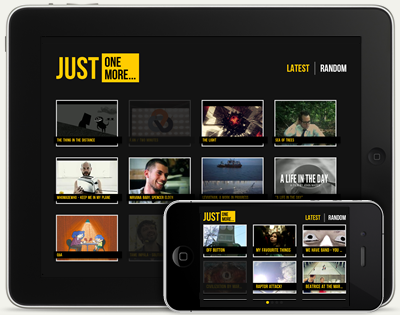
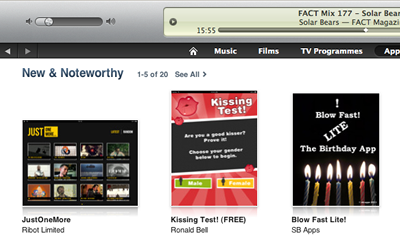
Our friends across the pond at Ribot have just had their killer movie browsing app Just One More featured by Apple as New and Noteworthy in the App Store.
Christina Warren just posted a good high level overview of how HTML5 is addressing cross platform dev for devices.
On PhoneGap:
PhoneGap is an HTML5 app platform that lets developers build native apps using HTML5, CSS3 and JavaScript. What really sets PhoneGap apart is that it lets developers create a full-functioning mobile web app but place that app in a native wrapper, so that it can use native device APIs and get submitted to the App Store or Android Market.
In essence, it enables mobile developers to create an app just as if they were targeting the mobile browser but with the benefit of being able to get into the App Store.
PhoneGap Build is a new service (still in beta) that lets developers quickly and easily create app-store ready versions of their apps for various platforms. It does all the work of compiling the code for various platforms and gives the developer a final build suitable for submission to the app market of their choice.
I don’t really consider Titanium as an HTML5 solution but it does tackle cross platform dev.