Archive for May, 2006
NetBeans Day – Innovation Happens Elsewhere! 
May 16th, 2006
The opening talk at NetBeans Day was standing room only! The big focuse was on partners and developer productivity.
- They have over 100 partnersApplause for JBoss and AMD joining the community
- There is now subversion plug-in for Netbeans, they announced a beta today
- Jonathan Schwartz the new CEO is very committed to developer platforms
- Tim Cramer and Judith Lilienfield have been doing to a lot to help the NetBeans community, partners and platform
- They realize and appreciate that innovation happens elsewhere
Why Jonathan Schwarts is big supporter of better developer tools:
- he started a company with a number of friends
- him and 4 developers
- when developers don’t have good tools they’re pissed, they waste time and you can’t build good software in that environment
- when the tools are good, they happier, more creative, release cycles were shorter, and the end software is a lot better
- the internet is getting better because the tools are getting better
- as the developer community improves, Sun’s market opportunities improve
- innovation happens elsewhere, not just inside of Sun
- Rich Green, the new man in charge of software, understands developer productivity
Rich Green and Jonathan Schwartz then had a chat:
- first question from Jonathan was “Rich are you going to open source Java?” this got a big laugh from the audience
- Rich mesage was it’s all about MORE: more developers, more community, more energy, more value
- need to keep java whole, compatible and reliable so that investments are protected
- powering up the community
- join the JCP, contribute more work, participate
- not many peoplein the audience are part of the JCP, good thing our CTO Dave Johnson is!
- keeping the platform open and grow the opportunity
Sprint then demoed they’re mobile development tools based on Netbeans
- sprint just released a special version of netbeans for working with they’re mobile platform, sprint mobility IDE
- looking to 3rd to get content and apps on the phone
- lots of people in the crowd have worked with JavaME
- sprint is more focused on data than any other carrier
- highest number of wireless data users in the US
- over 40 million customer purchases of Java ME content in the last year
- was the 1st to launch a Java enabled device in the US circa 2001
- fragmentation is the most frustrating thing when developing for wireless devices
- demo of RAD for wireless
- looks good, nice shiny buttons and good colors
- allows you to develop for and deploy to multiple platforms and devices
- allows easily to use custom components via a jar file
- they’re going to list custom components on their site
- you can wireframe the whole application
- inline editing of properties etc…
- built a demo app in 8 mins using the visual editor and drag and drop tools.
- used media player
- had to copy and paste a little bit of pre-written code
Neil gafter and josh bloch of Google
- start with a bunch of optical illusions with colors and shapes
- to reinforce that our brains construct what we see
- these illusions help understand how the brain works
- there are also code illusions
- the name game
Long divisioin
Tips
- we don’t want code that is merely correct, but rather clearly correct
- watcout for overflow, it’s a silent killer, no warnings
- when in doubt use a larger type
- don’t use lowecase L
it would be nice if the IDE would tell you this
netbeans can help expose many code illusions
you can write plugins that check for problems (Effective Java module, Java Puzzlers module)
as a community we can build these checkers that can make netbeans a more powefule tool
Demo of the Jackpot module
- running in NetBeans 5.5
- refactoring manager is a list of queries that be run against the source code to check for problems
- queries have associated re-factorings
- for example it can simplify loops
- sometimes it requires a human to review it
- it can for example find if statements that can be simplified
- they have an open API so you can extend it
- go out download it and play with it
- BlueJ IDE now has full integration with NetBeans
Jason van Zyl Founder of the maven project and he’s Canadian
- http://maven.apache.org
- had some tech issues but the crowd helped him to get through it!
- follows best practies and standards and applies this to build infrastructures
- allows for model driven development
- based on the project object model (POM) for Maven
- lower tco for ownership for build infrastructure
The NetBeans World Tour video was super cool! Good job to Judith, Roumen and the Team! I especially like Roman’s story about a developer from the audience fixing his sample code in exchange for a t-shirt.
I missed all the visual web development tool session because the room was too packed. This was unfortunate because they could have just had the rooms switched there would have been no problem.
Overally it was great to see so many developers and partners involved in NetBeans. However, I still think it has a ways to go to help developer productivity and also to be able to competed in the easy of use for developers. I think the community can do it though!
Then Sun sponsored Drinks…
Technorati Tags: netbeans, netbeansday, java, ajax, eba, sanfrancisco
Posted in Uncategorized | No Comments »
DCamp and remote usability testing service
May 13th, 2006
Nate from Bolt Peters – on remote usability test.
Some of the tools people:
-
gotomeeting
-
vnc
-
moray
-
webex
- breeze
Ethnio is a tool for online/remote usability testing. Has some recruiting features. And does screen capturing and teleconferencing and bunch of super cool features. Check it out. Nitobi needs to start doing more this…and we will!
Technorati Tags: dcamp, ethnio, usability, testing
Posted in Uncategorized | 1 Comment »
DCamp – 1st Notes
May 13th, 2006
We took blank white boxes and used a whole bunch of arts and class supplies to design a box that promotes the Dcamp conference. The game, Product Box, helps us invistigate the language of benefits vs the language of featues, which technical people often do. Good design comes from customer understanding. More info on Innovation Games. A principal goal of these games to get customers to work together to determine the feautres they need. Thanks Luke:)
Also, get your ghetto on! Funny website I overed some people here talking about:)
Rashmi demoed and gave a talk on MindCanvas. Her presentation started with a volunteer (ME) doing a buy a freature game with quarters for a cellphone. Then she showed us the buy a feature game in MindCanvas . Very cool UI. Uses sound and animation to make it fun for the user. http://themindcanvas.com/demos/index.php – u: uzanto p:mindcanvas (Alexei will be really stoked to check this out;-) Looks pretty cool and will be an for-fee online service very soon. Photos and videos coming soon.
More notes coming soon:-)
Technorati Tags: dcamp, ui, ux, usability, design, ajax
Posted in Uncategorized | No Comments »
Photos from the AJAX Experience
May 12th, 2006
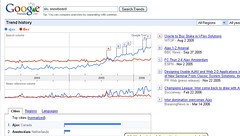
Google Trends
May 12th, 2006
Designing for AJAX by Bill Scott
May 12th, 2006
Principles and Patterns for Designing Rich Internet Applications. Talk by Bill Scott, AJAX Evangelist at Yahoo.
-not just AJAX, Flash or any other RIA
-Bill has a long history in UI, starting with games in the 80s
-primarily working on the Yahoo! Pattern Library developer.yahoo.net/ypatterns
-these are user interacting design patterns, not software patterns
Yahoo UI Pattern Library
-started cataloging everything inside and outside of Yahoo
-ajaxpatterns.org has more software patterns
-Why is yahoo this
-they want to think about them and get community feedback
-create a common language to discuss them, we need to name them clearly, like AJAX;)
-yuiblog.com
-they have a small set of patterns out at this time
-more coming
-there’s rest API for the patterns directory, can be consumed in corporate libraries
-they have a UI Library of components under the BSD license and the project is in SourceForge
-AC I wonder what % they contribute, do they keep secret sauce?
-users picked up on the drag and drop right away in yahoo mail beta because it looks like a desktop app – discoverability
-good to show this stuff to designers, because they might still be thinking in the old of the read only web (a lot more than designers need to learn about this)
-wherever there’s output, let there be input
-they got push back at Yahoo at first because they didn’t even know Flickr had inline editing
-discoverability
-what can I do?
-where can I do it?
-it’s important to keep the user
-its all about the user’s mental model (there user needs and wants)
-careful with things like drag and drop
-good for positioning
-list ordering
-transitions are important, as in visual cues
-don’t commit while the user is experimenting
-zuggest is a neat search for books on amazon
-use autocomplete for questions, such as technical support
-on tab out complete fields
-support for wildcards in auto-complete?
-provide immediate feedback for refinning search (live feedback)
-no need for a progress indicator under 1/4 of a second
-defer loading less important features or content…can load later
-live preview as in the Gap shopping site and Office 12 formatting
-keep the goal in mind with live feedback, design for immediacy
-keep in mind narrowing vs distracting the users attempt to reach the goal
-Bill doesn’t use google suggest except for showing it to people
-look for engaging moments
-use tips during wizards to lead the user along keep them engaged (time flys when you’re having fun)
-keep feedback focused and inline with where the user is looking, especially with animation
-when digg added it the traffic grew exponentially
-Invitation to interact (invitations aid discoverability)
-tool tips
-hove
-shadow
-cursor invitation
-drop invitation
-sign posts
-avoid crossing boundaries
-keep it inline
-if you do it can be distracting to the user
-rethink process flows
-plan for linking, crawling and back button
leave a ligh footprint
-watch your click weight
-count your clicks
speak to the Brain
-read mind hacks – hack #37 – It’s on my bedside table right now;-)
-your brain responds to light and fast moving objects
-understand attention processing
-careful with transitions, they shouldn’t fly at your head when they’re supposed to go away
-no the rules!
-what you can communicate:
-time: speed it up or slow it down
-keep it sane
-cut it in half rule of thumb
we’ve move from pages to objects
-shareable object
-determine the core work objects (schedule, etc…)
-we’re not always dealing with
-alan cooper’s a good guy to read for this stuff
-and check this out! Local Event Browser from yahoo.
-how do model the interaction and design for RIA
-storyboards
-Visio tool kit – that Bill has developed, helps you animate Visio diagrams
-wireframing
-what about right click menus, people use it and are familiar so they seem to work pretty well
-familiar vs intuitive interfaces features
-innovate in small chunks
-to keep
-how long will people wait or try to get it working, for a new web2.0 service maybe 30-60 secs
Technorati Tags: ajaxexperience, ajax, ajaxian, eba, billscott, ypatternexample
Posted in Uncategorized | 2 Comments »
Ajax Experience Notes from Friday
May 12th, 2006
I started with a short walk and an 8am breakfasat. I met Matt from http://raibledesigns.com, sounds like he does some interesting work helping businesses evaluating softare (mostly open source) solutions.
I then attened Thomas Fuchs talk. Here are my rough notes
- why does scriptaculous use animation?
- to provide visual feedback, such as when we update content it’s important to use some visual effect to remind the user we’ve updated the page.
- loading times can feel shorter, because something is happening it appears that the application is instant.
Future of Scriptaculous? There is no future plan…what ever developers come across in their projects…then it might get in if 80% of the users may use it. They feel it’s feature complete. But prototype is always getting new stuff based on application problems.
An interesting tidbit on grid performance metrics I picked up in the Flex presenation. Rows/ms. flex 2000 rows/541ms.
I also learned about Spry from which is an AJAXJavaScript framework from Adobe, but I don’t too much more at this point.
Kevin Lynch had a really cool presentation on Flex, the FA Bridge. Some of his coolest demos I’ve seen before, but are still way cool. The google maps with collaboration and video conference feeds. They’re performance is getting much better with large data sets. They have a cool push demo that is being updated constantly from the server, apparently they have sub-second updates. This is very important for financial institutions. Also some neat customer service collaboration features can be added, a CSR could interact with the same screen as the customer for example. ABC is using Flash Player to create an online TV experience. Can’t wait to watch Desperate House Wives online. Interesting commercial system, they won’t let you fast forward through a commercial, however they do let you know how long the commercial will last. It only let’s the user seek through the range they’ve watched the commercials for. Kevin’s one of the better and more knowledgeable speakers here for sure.
Wifi has been so-so far. But I’ve just been told they’ve remedied that. Another group was causing trouble.
Technorati Tags: ajaxexperience, spry, adobe, scriptaculous, fluxiom, ajax, flex, ajaxian
Posted in Uncategorized | 1 Comment »
Java and AJAX
May 12th, 2006
Notes from Greg Murray’s talk at the AJAX Experience.
JSF benefits include
- control content rendreing
- good for wyiswyg
Limitations:
- You can only have one JSF component island per page
- If a JSF component doesn’t fit your needs it can be very difficult to extend it or roll your own.
Greg then demoed the new Java Pet Store, now with AJAX!
http://developers.sun.com/ajax
- catalog.js
- dev.java.net/petsore
- they used Dojo wrapped in JSF
- they used the geo coder service from Yahoo and then plotted it on Google Maps
Greg just finished this app for JavaOne, and he’s proud of it…although he keeps saying “I sure hope this works”;-) Good old last minute demos with little testing.
-greg recommends building JSF components that degrade gracefully
JMaki – is an easier javascript centric way to do AJAX for Java. It’s a new project that Sun has announced and Greg’s working. Looks pretty cool.
Technorati Tags: ajax, ajaxian, ajaxexperience, jsf, jmaki, java, eba
Posted in Uncategorized | 2 Comments »
AJAX Patterns to keep the user in flow!
May 11th, 2006
Michael Mahemoff on AJAX Patterns at the AJAX Experience 2006.
AJAX evolved from users loosing out on usability due the web revolution. Couldn’t agree more:) But Google Maps made it popular. Click of the fingers and you have a new verion running, just go to this URL.
So there’s a lot of sexy and buzzy stuff to AJAX but there’s also a whole bunch of practcial and usable benefits. Patterns can help us build quick, reliable and robust apps amongst other things. People encounter similar problems which lead to similar solutions that we can record and describe in “patterns”. Again because we have similar constraints and similar goals we research what people have done and how they can repeat it. Michael looked at new ajax apps, pre-ajax apps, conventional apps, desktop apps and flash apps. This leaves me thinking the next step is video game interfaces:)
The Bill Gates wealth clock was one of the first serious mashups, built by Phillip Greenspun.
Usability principles:
-follow web standards (portable and working on all the web standards)
-standards are not just technology, but user interface conventions (UI patterns)
-if you’re delivering more value, follow the standards
-incremental enhancements
-grammar of the web (how you register for a website for example)
-the browser is not a desktop so don’t pretend it is
-if it’s different, make it really different
-different constraints and different goals
-make it really obvious you’ve done something different, not just slightly different, they will have assumptions of how it works
-keep the user in flow, keep the users attention
-user ignoring the application, and getting on with tasks
-the form of the UI should indicate to the user what they should do it
AC perhaps we should study the most used UI conventions?
-shadows indicate that a window is not attached to the page and therefore maybe you can drag and drop it. Users will likey understand this
-customization on the web, support customization and make it fun
-multi billion dollar game industry and cellphone ringtone etc…
-this stuff is not just silly or fun, there’s a lot of value
-embrace JavaScript, even if you use a framework you’ll need to know Javascript to select them and debug them. Browsers will change etc.
-dmbrace workarounds where necessary: ajax is a hack, band-aid solution, duct tape
-Partition into multiple tiers (the server doesn’t even have to know that a web app is running)
-again use libraries
-reduce bandwidth and deal with latency
-latency can be tricky, especially when dealing variablility or “jitter”
-tame asynchrony
-sequence of sending and receiving requests is important, the first request may come slower or after the second
-go easy on the browser
-practive graceful degradation (richer plugin)
-progressive enhancement
-flash is a great partner with AJAX
-ajaxpatterns.org contains 70 patterns
-refactoring and ajaxifying
-ajaxgram – http://ajaxify.com/tutorial
-use patterns to upgrade certain parts…one pattern at a time from one version to a newer better one
-useful to have even basic patterns so we have a common name and vocabulary to communicate with, however this doesn’t necessarily help the user
-not always a good idea to capture every keystroke, shouldn’t do this…slams the server and why does the user care
-the old AJAX lite vs. AJAX Deluxe. How do we know which is most appropriate?
-AJAX to the Max!!
-about half the audience of just over 100 people are currently working on an AJAX project
-XHR Vs. IFrame Call – this will be an ongoing debate for some time pros and cons to each.
-Michael’s encouraging everyone to use remoting libraries
*Ok rough notes again*
Christopher Alexendar – Design patterns – check out this book
Michael’s a great presenter, very animated and seems to really know his stuff! Sat next to Bill Scott for this talk…no stranger to AJAX, UI or Design Patterns:)
Technorati Tags: ajaxexperience, ajaxpatterns, ajax, ajaxian
Posted in Uncategorized | No Comments »
AJAX Experience – Keynote by Ben and Dion
May 10th, 2006
Brough us through the history rich web, dhtml and XHR. Funny and very entertaining. Web developers are cronstrained, but this creates true creativity.
They feel AJAX is not only catching up with current desktops, but are passing them.
www.fluxiom.com – Scriptaculous – Thomas Fuchs
www.google.com – Google Apps
www.adobe.com – Breeze
IE7 only have minor features, and is XP+ only. We’ll have IE 6 Forever. Some other new stuff in browswers will be SVG and Canvas, plus a VML wrapper for IE to display a subset of SVG. So we’re basically stuck with Browsers we have. The new RIA technologies like above and WPF and Flash are proprietary so may suffer uptake.
What they say we need for the next gen browsers:
-2D drawing on top of directx, quatz and cairo/xgl – definitely needed for graphing and other cool
-just-in-time compiled javascript
-transparent memory model with great memory introspection/debugging
-off-line storage API – Booyah!!!
Basically once we have these features we can do most of what we can do today on the desktop online. Heck ya!!
Should be a fun conference. More coming soon.
Technorati Tags: theajaxexperience, ajaxexperience, SF, ajaxian, ajax, keynote
Posted in Uncategorized | No Comments »
|
 |
|
Search Posts
You are currently browsing the Andre’s Blog weblog archives
for May, 2006.
Pages
Archives
Categories
|


 Entries (RSS)
and
Entries (RSS)
and